
Index
- Introduction
- The Psychology of Goal Setting
- Clarity & Focus ✅
- Motivation & Commitment 🔥
- Skill Development & Deliberate Practice 🎯
- Habits, Routines & Consistency ♻️
- Time Management & Productivity ⏳
- Better Decision Making
- Resilience, Setbacks & Learning 💪
- Relationships & Social Growth 🤝
- Career & Financial Development
- Measurement, Feedback & Iteration 🔍
- Mindset, Purpose & Meaning ✨
- Practical Frameworks & Techniques (SMART, GROW, If–Then)
- Common Pitfalls to Avoid
- A Simple Action Plan Template
- Real-Life Examples
- Deep Dive: Habit Formation & Learning
- Designing Your Personal Growth System
- Step-by-Step Practical Guide
- Sustaining Momentum & Avoiding Burnout
- Tools, Resources & Journaling
- FAQ, Case Studies & Accountability
- Final Thoughts & Call to Action
- Introduction
Goal setting is a strong driver of personal development. When done with purpose, it provides direction, clarifies priorities, and creates a plan for steady growth. This guide explains how goal setting supports personal development in mindset, skills, habits, relationships, and career, and offers practical steps to turn ideas into action.
- The Psychology of Goal Setting
The science behind goal setting shows why clear targets boost performance. Specific goals focus attention, increase persistence, and direct working memory toward relevant information. People with clear targets use their energy more effectively; they assess their progress quickly and maintain motivation. This scientific basis explains why regularly using goal setting leads to tangible personal growth.
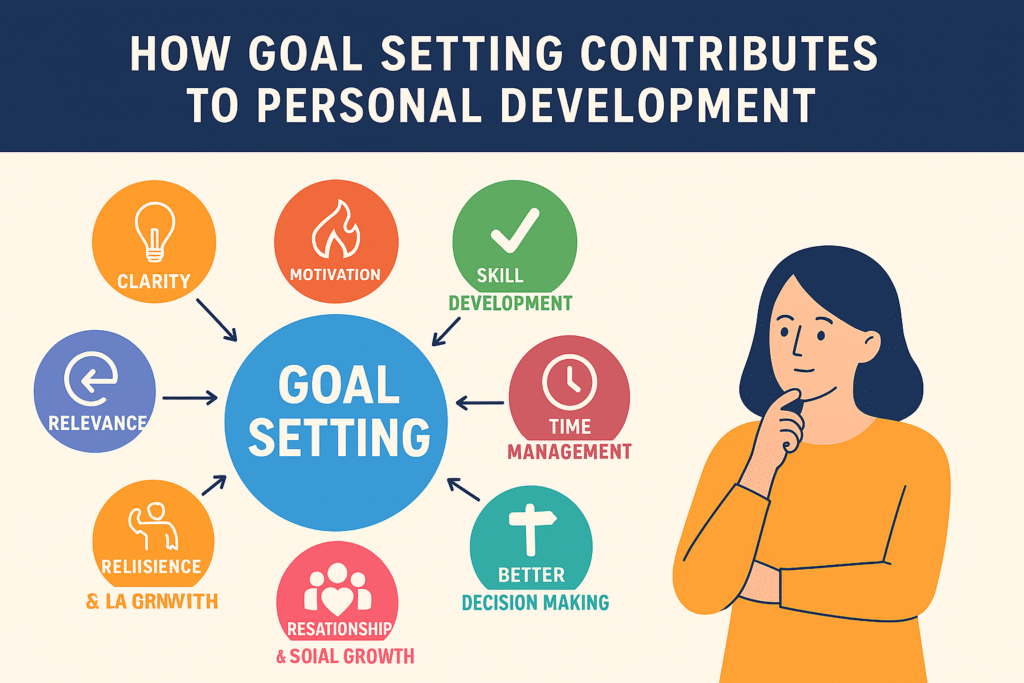
One key way goal setting aids personal development is by enhancing clarity. Clear goals turn vague desires into specific steps. Instead of saying, “I want to be healthier,” establish measurable outcomes and the actions that will achieve them. Clarity lessens decision fatigue, allowing mental energy to be directed toward important work and consistent progress.
- Motivation & Commitment
Goal setting boosts motivation by establishing measurable checkpoints and deadlines. Commitment increases when targets are specific and meaningful. Regularly reviewing progress builds momentum and creates a cycle of small wins that fosters long-term commitment. Connecting goals to personal values generates intrinsic motivation, which fuels ongoing effort.
- Skill Development & Deliberate Practice
Personal development often involves learning new skills. Goal setting provides a framework for deliberate practice: scheduled, focused sessions with feedback. Breaking down a large skill into smaller parts and tracking progress speeds up mastery. Over several months, targeted practice, supported by clear goals, yields much better results than scattered efforts.
- Habits, Routines & Consistency
Goal-oriented change relies on forming good habits. Goal setting helps you create routines—daily or weekly habits—that add up to significant results over time. Link new behaviors to existing routines and use small, repeatable actions to gain momentum. Consistency, rather than intensity, is usually essential for long-term personal development.
- Time Management & Productivity
Good time management enhances goal setting. Reserve focused work periods for high-priority goals, shield those times from distractions, and plan for rest. With clear objectives, you will know which tasks require your best hours. This approach boosts productivity while maintaining well-being.
- Better Decision Making
Clear goals serve as a filter for decision-making: does this action help me reach my goals or not? Using this simple guide makes daily choices easier and cuts down on the energy spent on low-value tasks. In practice, this leads to fewer impulsive decisions and more strategic actions that align with long-term growth.
- Resilience, Setbacks & Learning
Goal setting prepares you to manage setbacks more effectively. A solid plan includes checkpoints and feedback loops, so failures serve as learning opportunities rather than the end of the road. Iterating—adjusting tactics and quickly learning—turns challenges into stepping stones and builds emotional resilience.
- Relationships & Social Growth
Goals don’t only apply to individuals. Sharing goals with family, partners, or teams promotes accountability, clarifies expectations, and encourages cooperation. Joint goals create chances for mutual support and constructive feedback, benefiting both personal and relationship development.
- Career & Financial Development

Professionals who set clear performance and learning goals progress more quickly. Align skill development with promotion requirements, set measurable outcomes, and schedule regular learning sessions. Financial goals—such as savings, investments, and budget targets—also improve with careful planning and review.
- Measurement, Feedback & Iteration
Measuring progress turns hopes into clear indicators. Tracking progress through metrics, checklists, or simple logs informs choices and builds confidence. Feedback—whether from self-reflection or others—helps you adjust your approach and reinforce what works. This iterative mindset is central to effective personal growth.
- Mindset, Purpose & Meaning
Goal setting influences mindset by directing actions toward growth. When goals are seen as experiments—ways to learn rather than strict pass/fail tests—they lessen fear of failure and encourage curiosity. Tying goals to a deeper purpose enhances meaning and keeps motivation high over extended periods.
- Practical Frameworks & Techniques
Practical frameworks make goal-setting actionable:
- SMART (Specific, Measurable, Achievable, Relevant, Time-bound) for clarity.
- Implementation intentions (“If X, then Y”) to automate behavior.
- GROW (Goal, Reality, Options, Will) for coaching and reflection.
Combining these tools increases the effectiveness of any personal development plan.
- Common Pitfalls to Avoid
Common mistakes include vague goals, juggling too many objectives at once, neglecting well-being, and failing to review progress. Avoid these by concentrating on a few high-impact goals, scheduling rest, and regularly assessing your progress. Balance ambition with realistic expectations.
- A Simple Action Plan Template
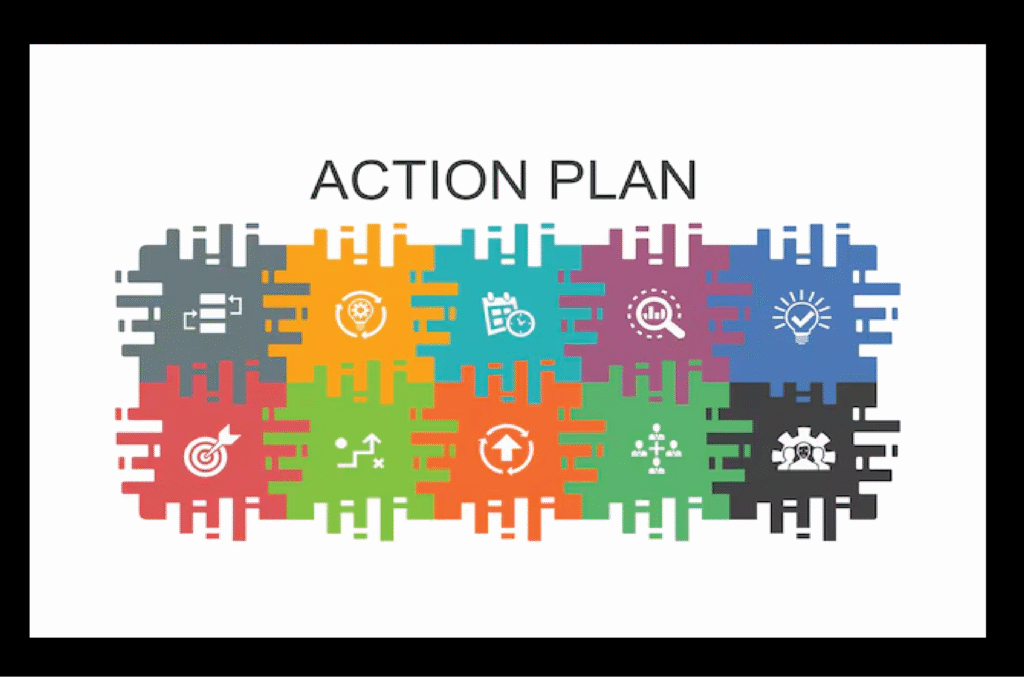
A repeatable plan to assist your growth:
- Choose one major priority for 90 days.
- Break it into four monthly milestones.
- Define weekly tasks related to those milestones.
- Schedule focused work sessions.
- Track one key metric and review it weekly.
This template translates lofty ambitions into daily practices that build over time.
- Real-Life Examples
- A writer sets a daily word count and weekly revision goals to finish a manuscript within six months.
- A manager identifies learning goals and arranges mentorship meetings to prepare for a promotion.
- A student creates a revision plan for exam prep with measurable milestones. Each example illustrates how clear planning turns aspiration into success.
- Deep Dive: Habit Formation & Learning
Habits form through repeated actions in stable settings. Pair new behaviors with existing routines (habit stacking), keep those routines simple, and reward yourself for progress. Deliberate practice and feedback speed up the move from beginner to skilled performer.
- Designing Your Personal Growth System

Build a system that connects values, routines, learning, and accountability. Choose three core values, create routines that support them, and establish a brief weekly reflection habit. Tools and accountability partners help maintain focus and ensure small, regular adjustments.
- Step-by-Step Practical Guide
- Select one focus area for 90 days.
- Divide it into monthly and weekly milestones.
- Plan actions as calendar entries.
- Use if–then planning to make responses automatic.
- Review each week and revise monthly.
Over time, this process leads to measurable growth without overwhelming you.
- Sustaining Momentum & Avoiding Burnout
Incorporate rest in your plan: daily breaks, weekly leisure time, and occasional longer breaks. Monitor well-being along with performance, and adjust the pace based on your energy levels. Sustainable growth depends on balancing effort with recovery.
- Tools, Resources & Journaling
Use apps, planners, or paper journals that suit your style. Track one metric, jot down short reflections, and maintain a log of lessons learned. The right tools simplify the process and make progress visible.
- FAQ, Case Studies & Accountability
Q: How long before I see results?
A: Small changes can show progress in weeks; deeper skill development can take months.
Accountability—through coaches, peers, or mentors—speeds up progress. Use measured experiments and refine based on feedback.
Case study: A developer committed to a weekly project and code review schedule; within six months, they completed a portfolio that led to a promotion. Practical commitment and regular reviews made a significant difference.
- Final Thoughts & Call to Action
In summary, goal setting is a foundational tool for personal development. It clarifies your purpose, builds skills, nurtures habits, and strengthens resilience. Begin today: choose one small, clear priority for the next 90 days, schedule your first action, and set a weekly review. Small, consistent efforts lead to substantial growth.
To get started now: Take five minutes to write down one priority, a measurable milestone, and the specific action you will take tomorrow. Treat it as an experiment—learn, adjust, and repeat.
for more article click here


Leave a Reply