
Introduction
Confidence is more than just walking tall or speaking loudly; it’s the inner strength that allows you to take action despite your fears. In today’s fast-paced and competitive world, building confidence is more important than ever. Whether you are a student, a professional, an entrepreneur, or someone looking to enhance personal relationships, self-confidence forms the basis of success.
In 2025, the challenges have changed. You face digital competition, constant comparisons on social media, and rapidly changing opportunities. However, the solution is still the same: building a strong belief in yourself that drives you forward regardless of the obstacles.
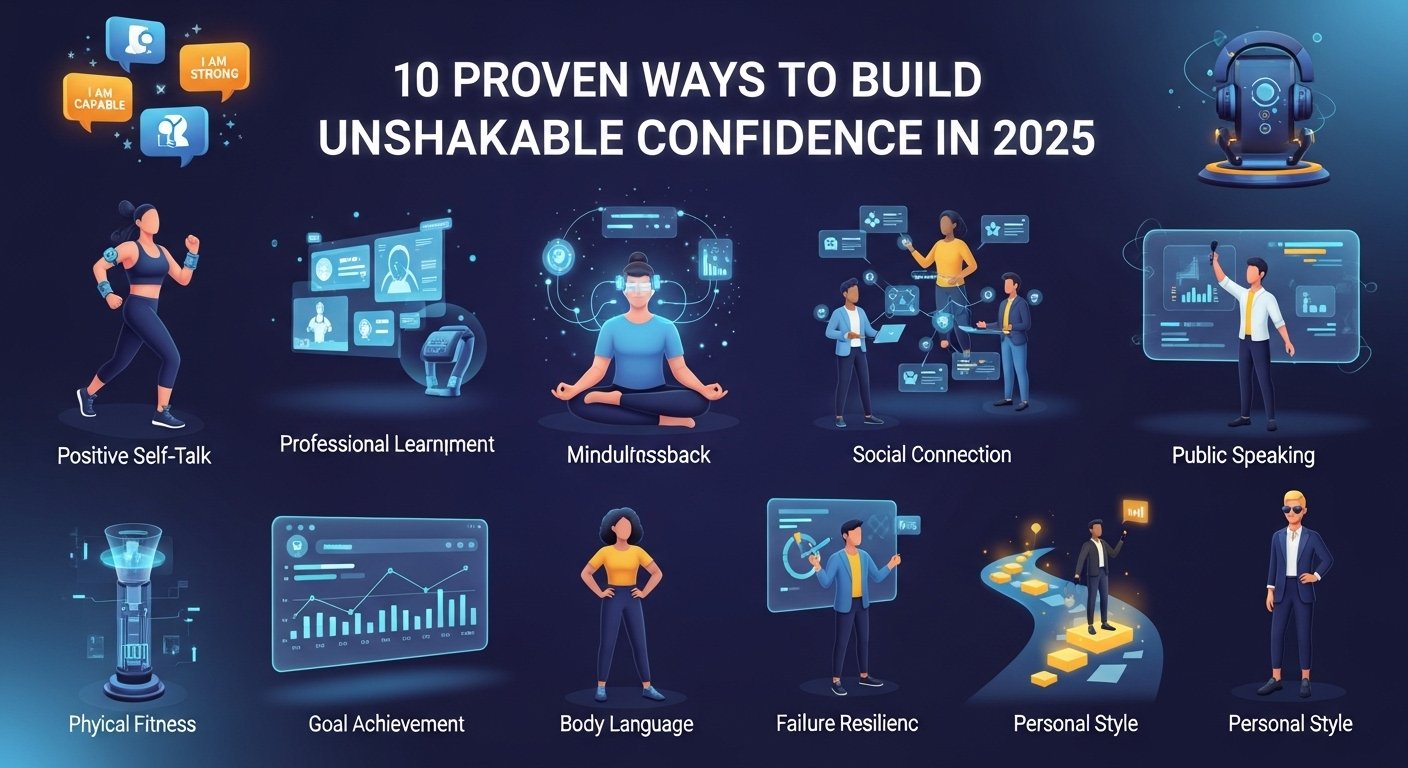
This article presents 10 proven ways to build unshakable confidence in 2025, along with practical strategies you can use today.
| # | Method | Key Action |
|---|---|---|
| 1 | Growth Mindset | Embrace challenges, learn from failures |
| 2 | Body Language | Stand tall, maintain eye contact |
| 3 | Build Competence | Learn and practice skills daily |
| 4 | Positive Self-talk | Replace doubt with affirmations |
| 5 | Care for Health | Exercise, eat well, sleep enough |
| 6 | Set Goals | Use small wins to build momentum |
| 7 | Communication | Practice speaking and listening |
| 8 | Comfort Zone | Take on new, challenging tasks |
| 9 | Positive People | Surround yourself with encouragers |
| 10 | Self-Acceptance | Embrace strengths and weaknesses |
Develop a Growth Mindset
A growth mindset means believing that your skills and intelligence can improve with effort and learning. People with a fixed mindset often limit themselves by thinking they can’t change. On the other hand, a growth mindset encourages you to embrace challenges, learn from mistakes, and celebrate progress.
How to practice it:
- Replace “I can’t do this” with “I can’t do this yet.”
- View failures as lessons rather than setbacks.
- Surround yourself with people who encourage growth.
Master Body Language

You often communicate confidence even before you speak. Research shows that over 70% of communication is non-verbal. Good posture, steady eye contact, and open gestures not only affect how others perceive you but also influence how you feel about yourself.
Tips for confident body language:
- Stand tall with your shoulders back.
- Use a firm handshake.
- Smile genuinely to reduce stress and increase approachability.
- Maintain eye contact without staring.
- When you master body language, you project confidence without uttering a word.
Build Competence Through Skill Development
Real confidence comes from being competent. The more skilled you are at something, the more secure you feel in doing it. Whether it’s public speaking, digital marketing, coding, or sports, improving your expertise naturally boosts your confidence.
Action steps:
- Devote at least one hour each day to learning or practicing a skill.
- Take online courses or participate in workshops.
- Set small milestones and celebrate your achievements.
Overcome Negative Self-Talk
Negative thoughts can kill your confidence. Statements like “I’m not good enough” or “What if I fail?” block your progress. By replacing them with positive affirmations, you can rewire your brain for confidence.
Steps to overcome self-doubt:
- Identify your inner critic and list your negative thoughts.
- Counter them with positive affirmations such as “I am capable and resilient.”
- Practice gratitude daily to shift your focus from weaknesses to strengths.
- Building confidence requires consistent positive reinforcement in your thinking patterns.
Take Care of Your Body and Mind
Your physical and mental well-being directly affect your confidence. Regular exercise, healthy eating, and mindfulness practices like meditation create balance and self-assurance.
Confidence-boosting habits:
- Exercise for at least 30 minutes daily.
- Eat whole, nutrient-rich foods.
- Practice deep breathing or meditation to manage stress.
- Get enough sleep to recharge your mind.
Set and Achieve Small Goals
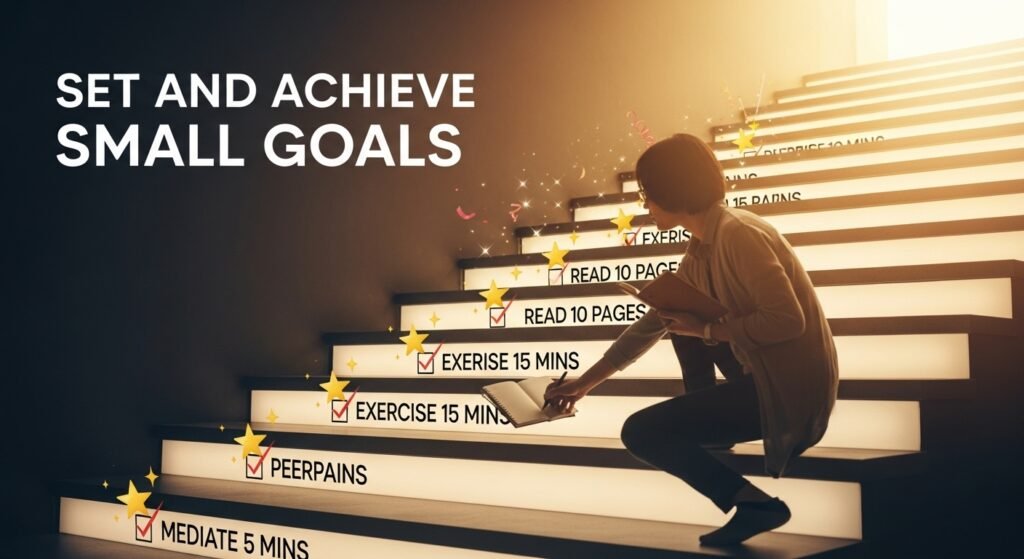
You build confidence through action. When you set achievable goals and accomplish them, you teach your brain to trust in your abilities. Small wins add up to significant confidence.
Steps to practice goal-setting:
- Break larger goals into smaller, manageable tasks.
- Use the SMART formula (Specific, Measurable, Achievable, Relevant, Time-bound).
- Track your progress and reward yourself for each milestone.
Every completed goal, regardless of size, strengthens your belief in yourself.
Improve Communication Skills
Clear and effective communication is a powerful confidence booster. Whether you’re speaking in a meeting, giving a presentation, or interacting socially, good communication helps express your ideas better.
Ways to improve:
- Practice active listening.
- Expand your vocabulary by reading every day.
- Record yourself speaking and analyze how you can improve.
- Join public speaking groups or clubs.
Step Out of Your Comfort Zone
You don’t grow in comfort. self-belief increases when you push yourself with new experiences and take calculated risks.
Examples of stepping out of your comfort zone:
- Try a new hobby.
- Speak up in meetings, even if you feel nervous.
- Travel alone or attend networking events.
- Volunteer for responsibilities you haven’t handled before.
Each time you step outside your comfort zone, you remind yourself that you can handle uncertainty, making you stronger and more confident.
Surround Yourself with Positive People

Your environment significantly influences your self-belief journey. Negative people drain your energy, while supportive individuals uplift you.
Action steps:
- Build a network of mentors and like-minded peers.
- Limit your time with those who constantly criticize or discourage you.
- Join communities (online or offline) that motivate growth.
Remember, you are the average of the five people you spend the most time with. Choose wisely.
Practice Self-Acceptance and Authenticity
self-belief isn’t about perfection; it’s about embracing your true self. Being authentic attracts respect and fosters lasting confidence.
How to practice self-acceptance:
- Acknowledge your strengths and weaknesses without judgment.
- Stop comparing yourself to others on social media.
- Focus on your unique qualities and talents.
- Celebrate progress instead of seeking perfection.
Conclusion
Building unshakable confidence in 2025 is not about quick fixes; it requires consistent action and self-growth. By developing a growth mindset, improving your skills, practicing self-care, and surrounding yourself with positivity, you can turn fear into fuel and self-doubt into self-belief.
Remember, self-belief is like a muscle. The more you work on it, the stronger it becomes. Start with one or two strategies from this list today, and you’ll soon notice a significant change in how you see yourself and how others respond to you.
FAQs (Voice Search Optimized)
Q1: How long does it take to build confidence?
Building confidence is a gradual process. With daily practice of mindset shifts and positive habits, most people notice improvements in a few weeks.
Q2: What is the quickest way to build confidence before an event?
Use power poses, deep breathing, and positive affirmations. Remind yourself of past achievements and focus on the value you will deliver.
Q3: Can anyone learn confidence at any age?
Yes! Confidence is not fixed. Whether you are 15 or 50, practicing the right techniques can help you develop strong self-belief.
Q4: Why is self-belief important in 2025?
In our fast-changing digital world, self-belief helps you adapt, take risks, and stand out in your career and personal life.
for more articles click here


Leave a Reply