
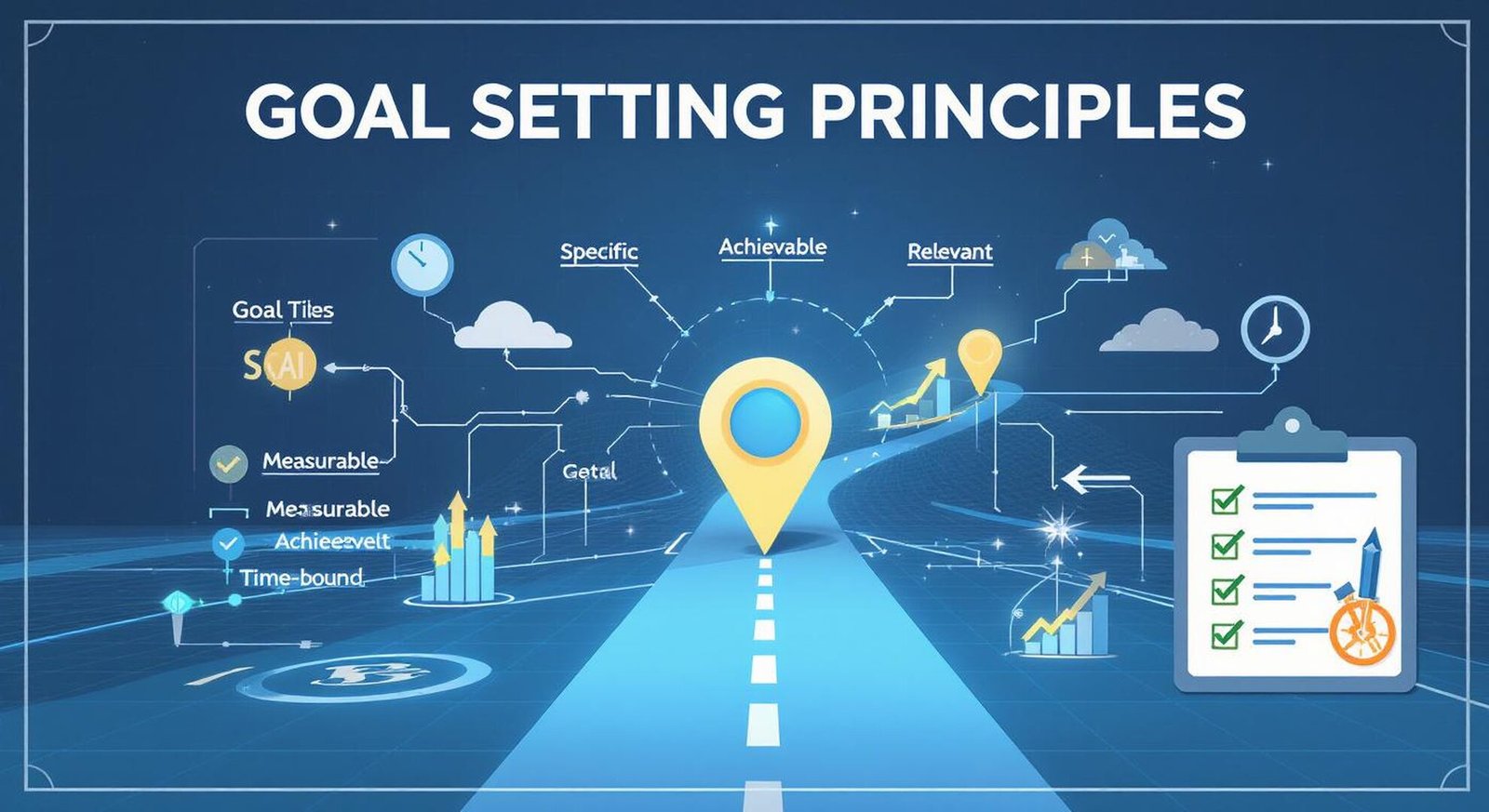
A Complete Guide to Achieving Success Through Structured Goals
📑 Index
- Introduction: Why Goal Setting Principles Matter
- The Psychology Behind Goal Setting
- The 7 Core Goal Setting Principles
- Clarity
- Challenge
- Commitment
- Feedback
- Task Complexity
- Relevance
- Time-Bound
- Importance of Applying Goal Setting Principles in Daily Life
- Real-World Examples of Goal Setting Principles in Action
- How to Use Goal Setting Principles for Personal Growth
- Goal Setting Principles in Business & Professional Success
- Common Mistakes to Avoid in Goal Setting
- Practical Tips to Master Goal Setting Principles
- Final Thoughts
Introduction: Why Goal Setting Principles Matter
Success in life, business, or personal growth doesn’t happen by accident. It comes from setting well-planned, clearly defined goals. This is where principles of setting goals are important. These principles offer a structured way to figure out what you want, divide it into achievable steps, and keep your motivation high until you reach your goal.
When you understand and apply the principles of goal setting, you turn vague wishes into clear plans. This helps you stay focused, overcome distractions, and make steady progress.
The Psychology Behind Goal Setting
Psychologists Edwin Locke and Gary Latham developed Goal Setting Theory, proving that specific and challenging goals lead to higher performance. This theory highlights the psychological foundation of principles of setting goals—they are not just motivational ideas but scientifically backed strategies that increase achievement.
They are not just motivational ideas; they are backed by science and help improve achievement.
When goals are clear, measurable, and meaningful, our brains are more likely to stay engaged. Using principles of setting goals helps align motivation, behavior, and effort towards success.
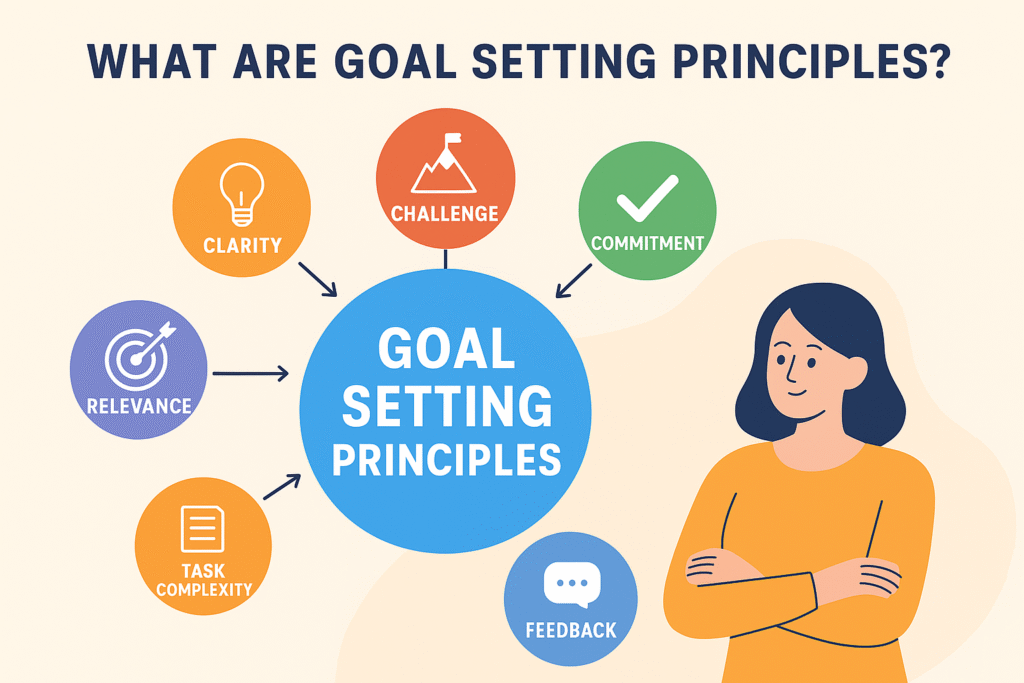
The 7 Core Goal Setting Principle
- Clarity
A clear goal is easier to understand, track, and achieve. For instance, instead of saying “I want to get fit,” apply principles of setting goals by saying, “I want to lose 10 pounds in 3 months by exercising 4 times a week and eating balanced meals.”
- Challenge
Goals should push you outside your comfort zone. According to the principles of setting goals challenging goals encourage more effort and determination compared to easy ones.
- Commitment
You need to be fully committed to your goals. Write them down, share them with others, and remind yourself each day why they matter. Commitment is one of the strongest principles of goal setting for long-term success.
- Feedback
Regular feedback helps you stay on track. This can come from self-reflection, tracking progress, or getting input from mentors. Without feedback, it’s hard to know if you’re effectively applying the principles of setting goals
- Task Complexity
Break complex goals into smaller, manageable steps. For example, if your goal is to launch a business, divide it into research, planning, funding, and execution. This principle helps prevent feeling overwhelmed and keeps your momentum strong.
- Relevance
Goals should relate to your values and long-term plans. A key principle of goal setting is ensuring that your efforts move you closer to your ultimate vision.
- Time-Bound
Every goal needs a deadline. Deadlines create a sense of urgency and help prevent procrastination. Without time limits, even well-planned goals can lose momentum.
Importance of Applying Goal Setting Principles in Daily Life

Applying goal setting principles helps you:
- Stay focused and avoid distractions
- Increase motivation and productivity
- Build confidence through achievements
- Manage time more effectively
- Turn long-term dreams into short-term actionable steps
For example, students can use goal setting principles to study consistently, while professionals can apply them to improve their performance and advance in their careers.
Real-World Examples of Goal Setting Principles in Action
- Athletes use principles of setting goals to enhance training and performance.
- Entrepreneurs set revenue and growth goals and break them into quarterly targets.
- Students set academic milestones to prepare for exams.
- Fitness enthusiasts create structured workout and diet plans based on measurable outcomes.
How to Use Goal Setting Principles for Personal Growth
Write down specific goals daily.
- Use vision boards to visualize success.
- Track progress with journals or apps.
- Reward yourself for milestones.
- Adjust strategies when necessary but remain committed.
By consistently applying these goal setting principles, personal growth becomes more structured and predictable.
Goal Setting Principles in Business & Professional Success

Businesses do well when employees and teams follow structured principles of setting goals For example:
- Companies use SMART goals to align their teams.
- Managers set performance goals to increase productivity.
- Startups use goal setting principles to scale effectively.
These principles encourage accountability, teamwork, and innovation in professional settings.
Common Mistakes to Avoid in Goal Setting
- Setting vague goals without clarity
- Failing to track progress
- Ignoring feedback
- Making goals unrealistic
- Forgetting deadlines
By avoiding these mistakes, you strengthen the effectiveness of goal setting principles in your life.
Practical Tips to Master Goal Setting Principles
- Start small but think big.
- Break big goals into smaller steps.
- Review your goals weekly.
- Stay flexible and adjust to changes.
- Celebrate small wins along the way.
Final Thoughts
So, what are goal setting principles? They are structured, research-backed guidelines that turn dreams into achievable outcomes. Whether in personal life, academics, or business, these principles help you stay focused, motivated, and accountable.
By applying the goal setting principles of clarity, challenge, commitment, feedback, complexity, relevance, and deadlines, you create a strong roadmap to success.
for more article click here


Leave a Reply