

How to Build Confidence and Believe in Yourself Every Day
We’ve all had moments when self-doubt whispers in our ear — “You’re not good enough.”
Maybe it happens before an exam, an interview, or when you’re trying something new.
But here’s the truth — confidence isn’t something you’re born with; it’s something you build. It’s a daily practice, not a personality trait.
Believing in yourself is one of the most powerful skills you can develop. Once you do, every challenge becomes an opportunity, every fear becomes smaller, and success becomes a natural result of your mindset.
Let’s explore exactly how to build confidence and believe in yourself every single day, step by step.
What Does It Mean to Truly Believe in Yourself?
Believing in yourself means trusting your abilities, judgment, and potential — even when things get tough. It’s not arrogance or pretending to be perfect.
It’s about saying:
“I may not know everything, but I know I can learn, grow, and handle what comes my way.”
When you build self-confidence, you stop waiting for approval from others. You start living for yourself — with clarity, courage, and calmness.
Why Confidence Matters More Than You Think

Confidence affects every part of your life — relationships, career, health, and happiness.
When you feel confident:
- You make better decisions.
- You take action without overthinking.
- You communicate more clearly.
- You attract opportunities and respect.
On the other hand, low confidence creates hesitation, procrastination, and fear of failure.
The good news? Confidence can be trained, just like a muscle.
Step 1 — Silence Your Inner Critic
The first battle of confidence is fought inside your own mind.
That small voice that says “You can’t do it” is not your truth — it’s just fear disguised as logic.
To silence your inner critic:
- Catch it in the act — notice negative self-talk.
- Question it — ask, “Is this really true?”
- Replace it — say something empowering like, “I’m still learning, and that’s okay.”
The more you replace self-criticism with encouragement, the faster your confidence grows.
Step 2 — Focus on Progress, Not Perfection
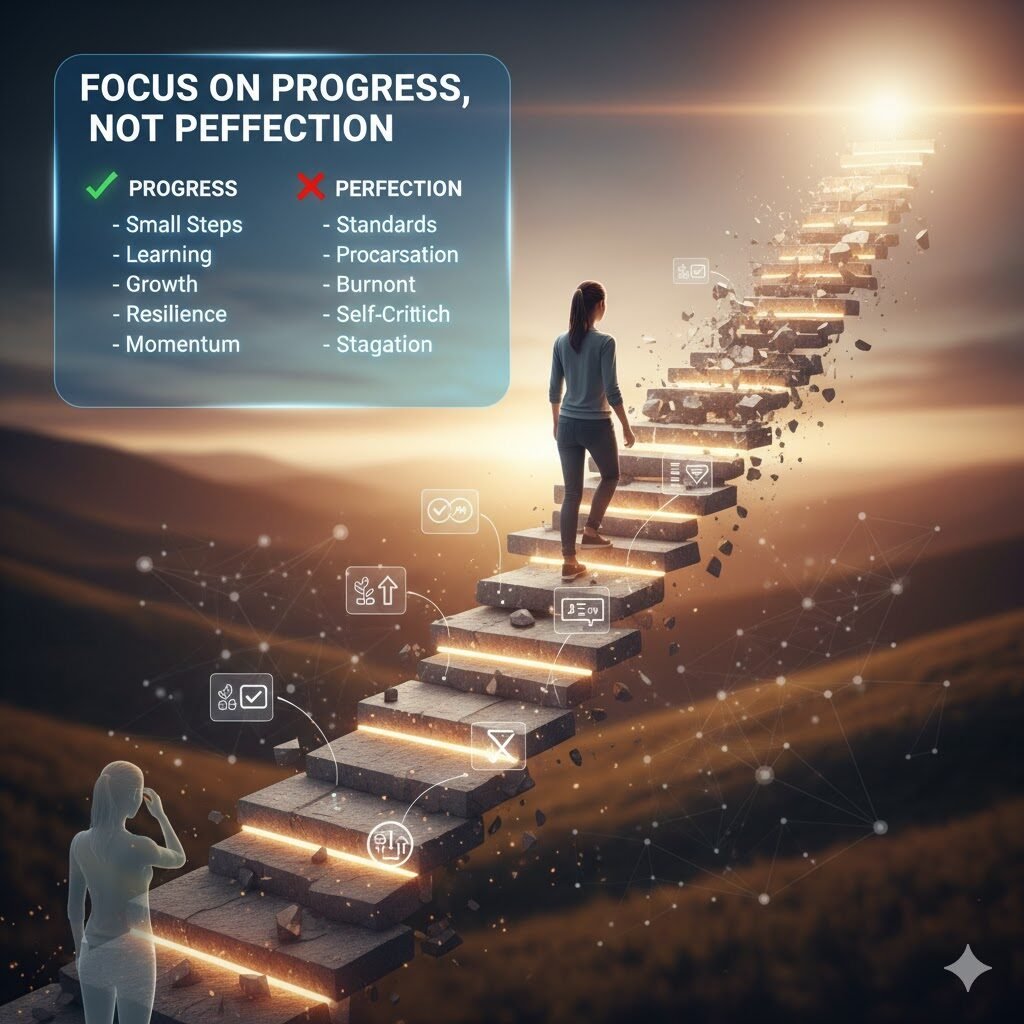
Perfection is an illusion that kills confidence. Nobody gets everything right all the time — not even the people you admire most.
Instead of aiming for perfection, aim for progress.
Every time you do something slightly better than yesterday, your brain registers growth and releases dopamine — the “confidence chemical.”
So, celebrate small wins. Whether you speak up in class, finish a task, or simply show up — it all counts.
“Confidence is built by showing up even when you’re scared.”
Step 3 — Set Small, Achievable Goals
Confidence is built through success experiences — moments that prove to yourself that you can achieve what you set out to do.
Start small. Don’t try to climb the whole mountain on day one.
Example:
- Instead of “I’ll get fit this month,” say “I’ll walk for 20 minutes today.”
- Instead of “I’ll top my class,” say “I’ll study one extra hour tonight.”
As you achieve these small goals, you create a chain reaction of belief. Each win makes the next one easier.
Step 4 — Surround Yourself With Positivity
The people and environment around you directly impact your confidence.
If you’re surrounded by negativity, gossip, or constant criticism, it will slowly drain your self-belief.
Instead:
- Spend time with people who uplift you.
- Watch and read motivational content.
- Limit your time with those who always point out flaws instead of progress.
Your energy grows in the direction of your environment. Choose wisely.
Step 5 — Take Care of Your Body and Mind
Confidence isn’t just mental — it’s also physical.
Your posture, energy, and appearance influence how you feel about yourself.
Simple habits that boost self-confidence:
- Exercise daily: Even 10 minutes can lift your mood.
- Eat healthy: A clean body supports a clear mind.
- Sleep well: A tired brain always doubts itself.
- Maintain good posture: Stand tall — your body language affects your mindset.
When you feel good physically, it’s easier to think positively.
Step 6 — Keep Promises You Make to Yourself
Every time you keep a promise — even a small one — you build self-trust.
If you tell yourself “I’ll wake up early” and you do it, your brain records: “I can rely on myself.”
If you break promises repeatedly, your subconscious starts believing you’re not serious.
Start small:
- Make 1–2 daily promises to yourself.
- Follow through consistently.
Confidence grows from discipline and self-respect.
Step 7 — Embrace Failure as Part of Growth

Every confident person you know has failed — probably more times than you can imagine.
Failure is not the opposite of confidence — it’s the foundation of it.
When you fail but keep going, you prove to yourself that setbacks don’t define you.
Ask yourself after every challenge:
- “What did I learn?”
- “What can I do differently next time?”
Turn mistakes into lessons, and they’ll become your strength.
Step 8 — Practice Gratitude and Affirmations
Your brain can’t focus on fear and gratitude at the same time.
When you appreciate what you already have, your energy shifts from “I’m not enough” to “I have enough.”
Morning exercise:
- Write 3 things you’re grateful for.
- Say 3 affirmations out loud:
- “I am confident and capable.”
- “I believe in my potential.”
- “I trust my journey.”
This daily habit rewires your brain for positivity and resilience.
Step 9 — Speak and Walk With Confidence
Your body language often communicates before your words do.
Practice these:
- Maintain eye contact.
- Stand straight with shoulders back.
- Speak slowly and clearly.
- Smile genuinely.
Even if you don’t feel confident at first, act confidently — your brain will catch up.
This is known as the “power pose effect” — the more you act like a confident person, the more you become one.
Step 10 — Visualize Your Confident Self
Close your eyes and imagine the most confident version of yourself — how they talk, walk, and handle challenges.
Then ask:
“What would that version of me do right now?”
Visualization helps your brain rehearse success before it happens.
Athletes, CEOs, and performers all use this technique — and it works.
Step 11 — Keep Learning and Growing
Confidence thrives on competence.
The more you learn, the more you feel capable.
Commit to lifelong learning:
- Read one page daily.
- Learn a new skill monthly.
- Watch content that challenges your thinking.
Growth builds self-assurance — because you know you’re always evolving.
Step 12 — Be Kind to Yourself
Self-compassion is not weakness — it’s strength.
You don’t need to be your harshest critic to grow; you just need to be your most consistent supporter.
When you make mistakes, talk to yourself the way you’d talk to your best friend.
“It’s okay. I’ll try again tomorrow.”
Confidence grows when you replace judgment with understanding.
Step 13 — Avoid Comparison
Comparison is a thief of joy and confidence.
Social media often shows only the highlight reel of people’s lives — not their struggles, failures, or hard work.
Remember:
“Don’t compare your chapter 1 to someone else’s chapter 20.”
Focus on your journey. The more you compete with your past self, the faster you’ll grow.
Step 14 — Stay Consistent, Even on Hard Days
Confidence is not built in a single moment of motivation — it’s built through consistent effort over time.
Even when you don’t feel like it, show up for yourself.
Small daily wins compound into lifelong self-belief.
“Discipline creates confidence. Consistency creates success.”
| Step | Confidence-Building Habit | How It Helps You |
|---|---|---|
| 1 | Positive Self-Talk | Replaces negative thoughts with empowering affirmations that strengthen your mindset. |
| 2 | Set Small, Achievable Goals | Helps you build trust in your own abilities by celebrating small wins daily. |
| 3 | Maintain Good Posture | Improves self-image and body language, signaling confidence to yourself and others. |
| 4 | Surround Yourself with Positivity | Boosts your motivation and helps eliminate self-doubt through supportive influences. |
| 5 | Keep Learning New Skills | Enhances self-worth and personal growth, making you feel capable and accomplished. |
Final Thoughts — Confidence Is a Choice You Make Every Day
Confidence is not something that appears magically one morning — it’s a decision you make every day to believe in your potential, even when you’re unsure.
Some days you’ll feel strong. Some days you won’t. That’s normal.
What matters is that you keep believing in your ability to grow.
Every time you silence your doubt, take action, and celebrate progress — you’re becoming more confident than you were yesterday.
So stand tall, smile, and remind yourself:
“I am enough, I am capable, and I’m getting better every single day.”
Because you are. 🌟
for more articles, click here


Leave a Reply