

Introduction
We’ve all been there — staring at the to-do list, scrolling endlessly through social media, or convincing ourselves that “we’ll start tomorrow.” Procrastination feels harmless at first, but over time it quietly steals productivity, motivation, and even confidence.
The truth is, procrastination isn’t just laziness. It’s often a mix of fear, perfectionism, overwhelm, or simply poor energy management. The good news? You can break free from it — starting today.
In this article, you’ll learn the psychology behind procrastination and proven strategies to overcome it. You’ll also get practical, science-backed tools to help you take action immediately — even when you don’t feel motivated.
| Focus Keyword | Stop Procrastinating |
|---|---|
| Title | How to Stop Procrastinating and Take Action Today |
| Meta Description | Learn how to stop procrastinating and take action today. Discover science-backed tips, daily habits, and motivation strategies to overcome delay and boost productivity. |
| Permalink | https://thelakshyaa.com/how-to-stop-procrastinating-and-take-action-today |
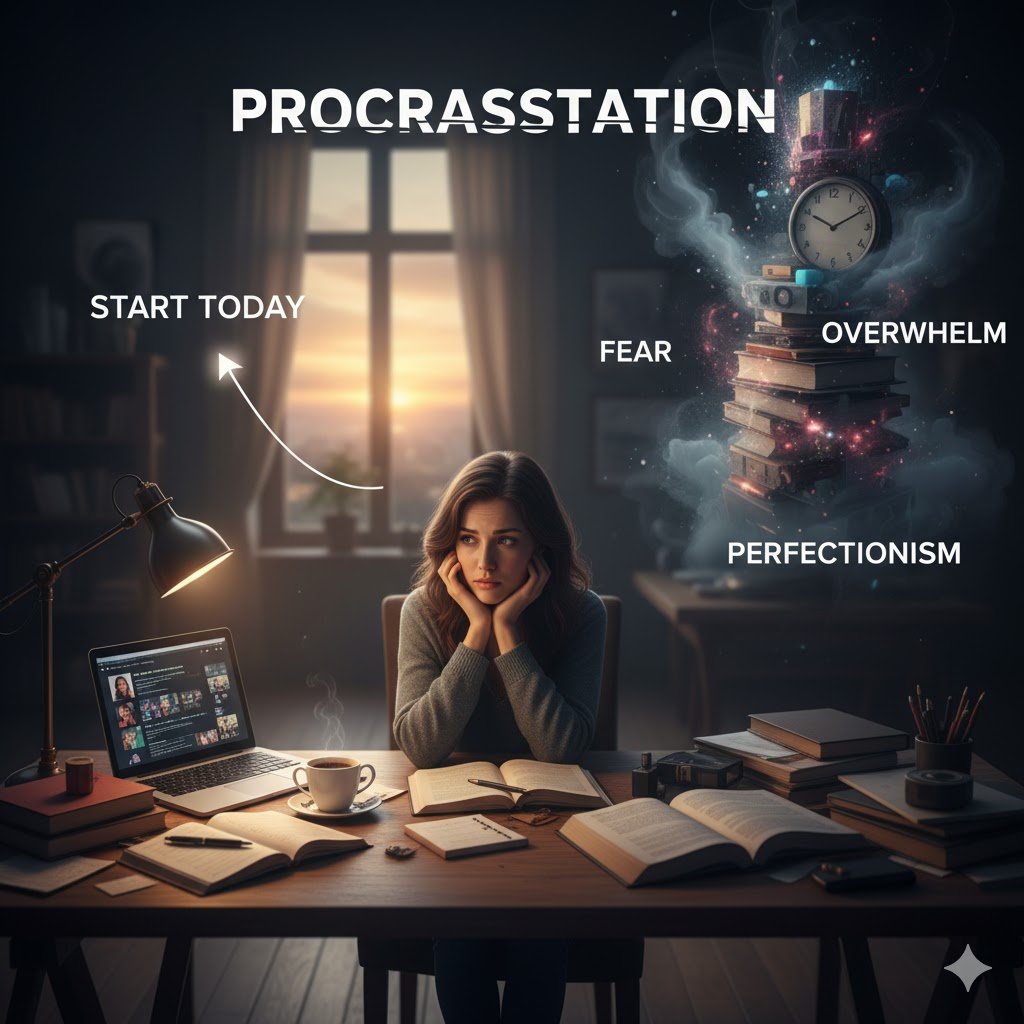
🧠 1. Understand Why You Procrastinate
Before you can fix procrastination, you need to understand what’s causing it. Procrastination is a coping mechanism — your brain’s way of avoiding discomfort.
Here are some common reasons people delay tasks:
- Fear of failure: “What if I don’t do it perfectly?”
- Perfectionism: Waiting for the “right time” or “perfect plan.”
- Overwhelm: The task feels too big, so you avoid it.
- Boredom or lack of purpose: You simply don’t find meaning in it.
- Distraction overload: Notifications, emails, and digital noise steal focus.
🎯 Tip: Identify your personal trigger. Once you know what’s really stopping you, you can address it directly instead of blaming yourself.
🕰️ 2. Break Tasks Into Smaller, Manageable Steps
The bigger the task looks, the more intimidating it feels. Breaking it down into smaller chunks makes it easier to start.
Example: Instead of writing “Finish project report,” start with:
- Open the document.
- Write the title.
- Add key points.
Each mini-task builds momentum.
✅ Science says: Completing small actions releases dopamine — the “reward chemical” that motivates you to keep going.
⚡ 3. The 2-Minute Rule — Just Start
A powerful anti-procrastination trick from productivity expert James Clear is the 2-Minute Rule:
“If it takes less than two minutes, do it right now.”
And for bigger tasks — just start for two minutes.
Once you begin, your brain naturally wants to finish what it started (called the Zeigarnik Effect).
🧩 Example: Tell yourself you’ll study for just two minutes — chances are, you’ll end up studying for 30.
🗓️ 4. Schedule Your Tasks — Don’t Leave Them to “Someday”
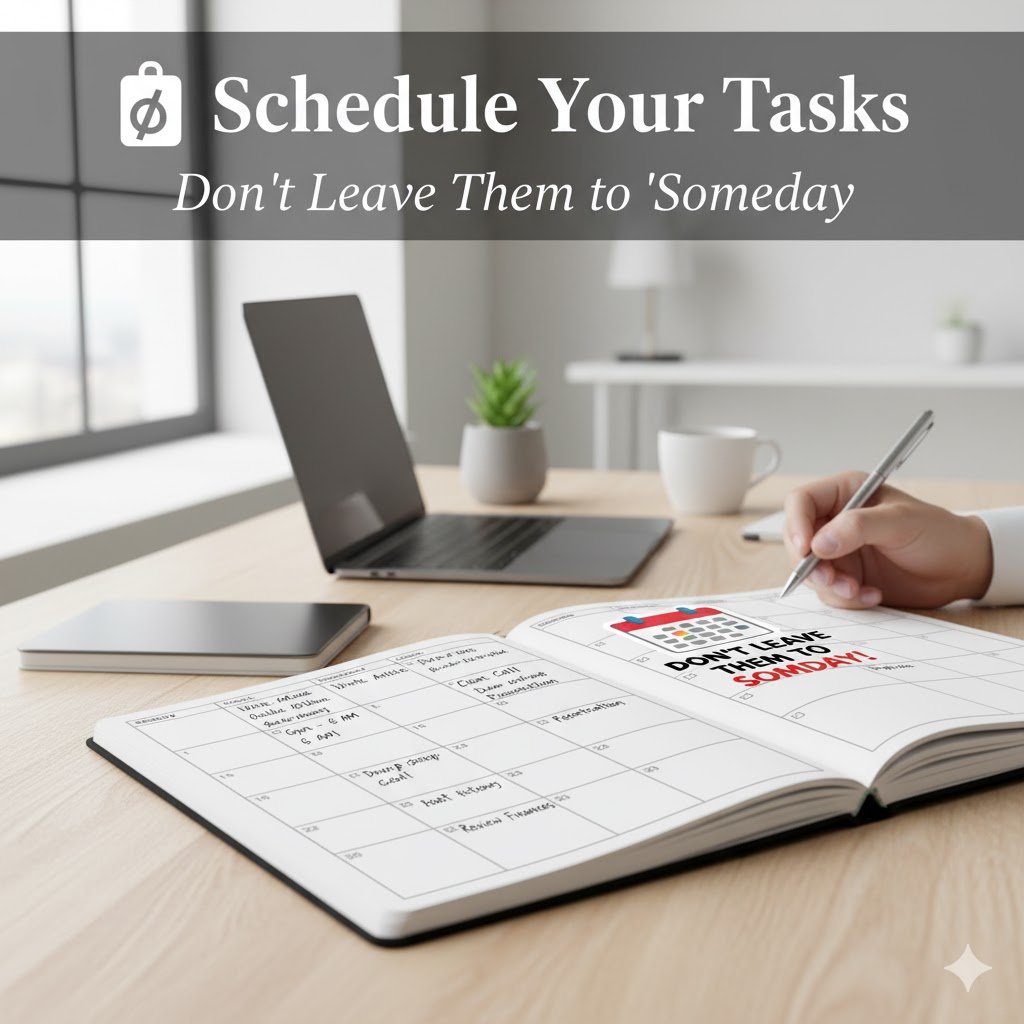
“Someday” is not a day of the week. If something matters, put it on your calendar.
- Assign specific times for important tasks.
- Use the time-blocking method: dedicate focused slots for deep work.
- Schedule breaks to avoid burnout.
📅 Why it works: Scheduling eliminates decision fatigue. When your tasks have time slots, your brain stops debating if you’ll do them and starts focusing on how.
💡 5. Remove Distractions from Your Environment
You can’t focus in a noisy, chaotic space. Your environment shapes your behavior more than willpower ever can.
Practical tips:
- Turn off unnecessary notifications.
- Keep only the tools you need on your desk.
- Use apps like Forest or Focus To-Do to stay distraction-free.
- Keep your phone out of sight during work periods.
🧘 Result: When your surroundings support focus, procrastination loses its grip.
🔁 6. Use the Pomodoro Technique
One of the most effective methods for staying productive is the Pomodoro Technique — working in short, focused bursts with scheduled breaks.
How it works:
- Choose one task.
- Work for 25 minutes (one Pomodoro).
- Take a 5-minute break.
- After 4 Pomodoros, take a longer 20-minute break.
⏱️ Benefit: It prevents burnout, improves focus, and makes large tasks feel more manageable.
🧭 7. Find Your “Why”
Sometimes procrastination comes from a lack of emotional connection to what you’re doing. When a task feels meaningless, your brain resists it.
Ask yourself:
- Why is this task important?
- How will completing it benefit my life or future?
- What will happen if I don’t do it?
🎯 Motivation tip: The clearer your “why,” the easier it becomes to start — even when you don’t feel like it.
🧘♀️ 8. Manage Stress and Energy, Not Just Time
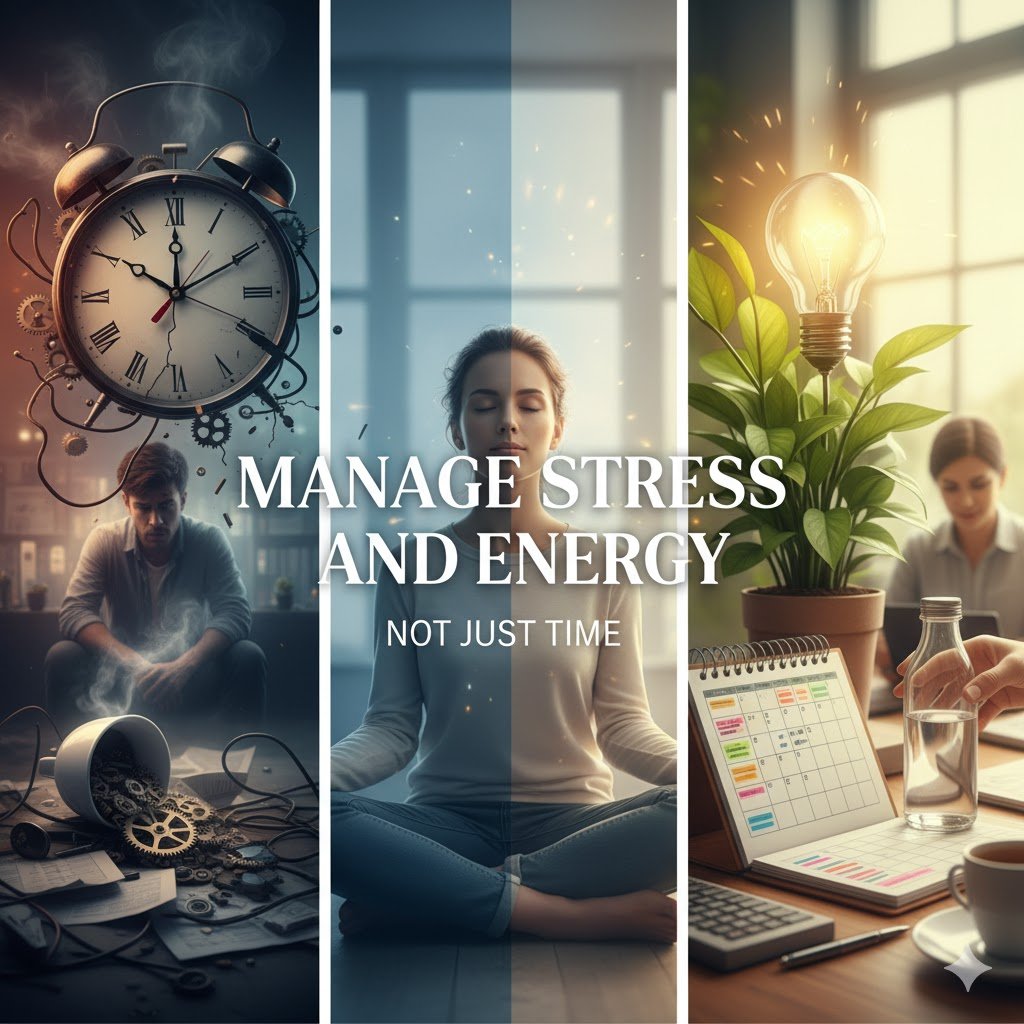
Procrastination isn’t always about poor time management. Sometimes it’s low energy or mental fatigue.
Energy management habits:
- Sleep 7–8 hours every night.
- Eat balanced meals — avoid sugar spikes.
- Take short walks or stretch breaks during work.
- Meditate or breathe deeply to reset focus.
🌿 Science insight: When your energy is steady, decision-making becomes easier, and you’re more likely to act instead of delay.
✍️ 9. Replace Negative Self-Talk with Encouragement
Procrastinators often think, “I’ll never finish this” or “I’m too lazy.” This mindset fuels avoidance.
Reframe your thoughts:
- Instead of “I have to,” say “I choose to.”
- Replace “This is too hard” with “I’ll do it step by step.”
- Reward yourself for progress, not perfection.
💬 Why it matters: Positive reinforcement builds confidence. Confidence, in turn, reduces avoidance and increases motivation.
🔥 10. Use Accountability
When someone expects you to deliver, you’re far less likely to procrastinate. Accountability creates healthy pressure.
Ways to stay accountable:
- Share your goals with a friend or mentor.
- Join a productivity or study group.
- Use tools like Trello, Habitica, or Notion to track progress.
🤝 Tip: Accountability transforms goals from “optional” to “necessary.”
🪞 11. Visualize the End Result
Visualization is more than daydreaming — it’s mental programming. Picture yourself completing the task and enjoying the reward that comes after.
Try this daily:
- Close your eyes for 1–2 minutes.
- Imagine finishing your work successfully.
- Feel the satisfaction and relief.
✨ Result: Your brain begins associating action with positive emotion, making you more likely to follow through.
⏰ 12. Stop Waiting for Motivation — Create Momentum
Many people think they need to “feel motivated” before taking action. The truth is, motivation follows action, not the other way around.
Start small. Do something — anything — related to your goal. Once you begin, momentum builds naturally.
🚀 Formula:
Action → Progress → Motivation → More Action
🧩 13. Reward Yourself for Progress
Positive reinforcement keeps your brain engaged. Celebrate even small victories — it trains your mind to link effort with pleasure.
Reward ideas:
- Take a break and enjoy your favorite snack.
- Watch a short episode of a show.
- Go for a walk or meet a friend.
🎉 Tip: Make rewards proportional. Big tasks deserve meaningful celebrations — it keeps motivation high long-term.
🛑 14. Stop Multitasking — Focus on One Thing
Multitasking feels productive but actually reduces efficiency and increases stress. Your brain performs best when it can fully concentrate on one thing.
Focus methods:
- Use a single-task list.
- Work in distraction-free blocks.
- Finish one thing completely before starting another.
💡 Fact: Research shows multitasking can lower productivity by up to 40%.
📚 15. Learn to Embrace Imperfection
Perfectionism is one of procrastination’s biggest roots. Waiting for the perfect plan or perfect time only wastes time.
Mindset shift:
- Progress beats perfection every time.
- Mistakes are part of growth.
- You can always revise, but you can’t edit what doesn’t exist.
🧭 Quote: “Done is better than perfect.”
🌈 The Psychology Behind Procrastination
According to behavioral scientists, procrastination is a short-term mood repair. When faced with an unpleasant task, your brain opts for something that feels good instantly (like scrolling or chatting).
This is called “present bias” — the tendency to prioritize immediate pleasure over long-term rewards.
To counter this:
- Make your tasks fun (use music or a cozy environment).
- Visualize the future benefits of finishing early.
- Track how good you feel after completing things.
Once your brain starts associating action with reward, procrastination fades naturally.
🧭 How to Stay Consistent Long-Term
Stopping procrastination for one day is easy. Staying consistent is the real challenge.
Long-term consistency tips:
- Review your goals weekly.
- Reflect on what triggered your delays.
- Adjust your methods when life changes.
- Keep learning productivity techniques that fit your personality.
Consistency comes from systems, not willpower. Build an environment and routine that make progress automatic.
🌟 Real-Life Example: The 5-Minute Power Start
If you ever feel stuck, use this quick routine:
- Breathe deeply for 1 minute to calm your mind.
- Set a timer for 5 minutes.
- Start the task — even if you only organize notes or write a title.
- Once the timer rings, ask, “Can I do 5 more?”
Nine times out of ten, you’ll continue. That’s momentum in action.
🌿 Conclusion
Procrastination isn’t a sign of laziness — it’s a signal. It tells you that something feels unclear, overwhelming, or uncomfortable. The solution isn’t to force yourself harder, but to understand yourself better.
Start small. Break your tasks. Manage your energy. Be kind to yourself. Every action, no matter how small, builds momentum.
Remember:
You don’t need to be perfect — you just need to begin.
By taking one step today, you’ve already beaten procrastination.
for more article click here


Leave a Reply