
Introduction
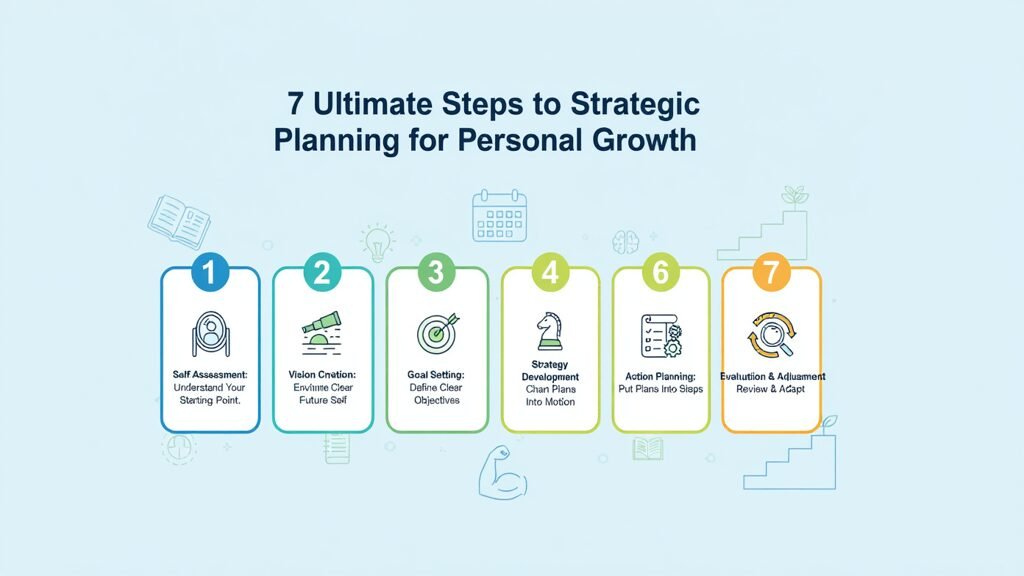
In today’s fast-paced world, planning for personal growth is essential. Just as businesses need strategic planning to thrive, individuals can also apply this framework to unlock their potential, reach their goals, and build a fulfilling life.
This article explores the 7 key steps of planning for personal growth and offers practical techniques, actionable insights, and mindset shifts you can start using today.
What is Strategic Planning for Personal Growth?
Strategic planning for personal growth is the organized process of figuring out your long-term vision, setting goals, examining strengths and weaknesses, and crafting a plan to achieve success.
Just like a company develops a 5-year growth strategy, you can design a personal plan that offers clarity, discipline, and direction for your journey of self-improvement.
Why Planning Matters in Personal Development
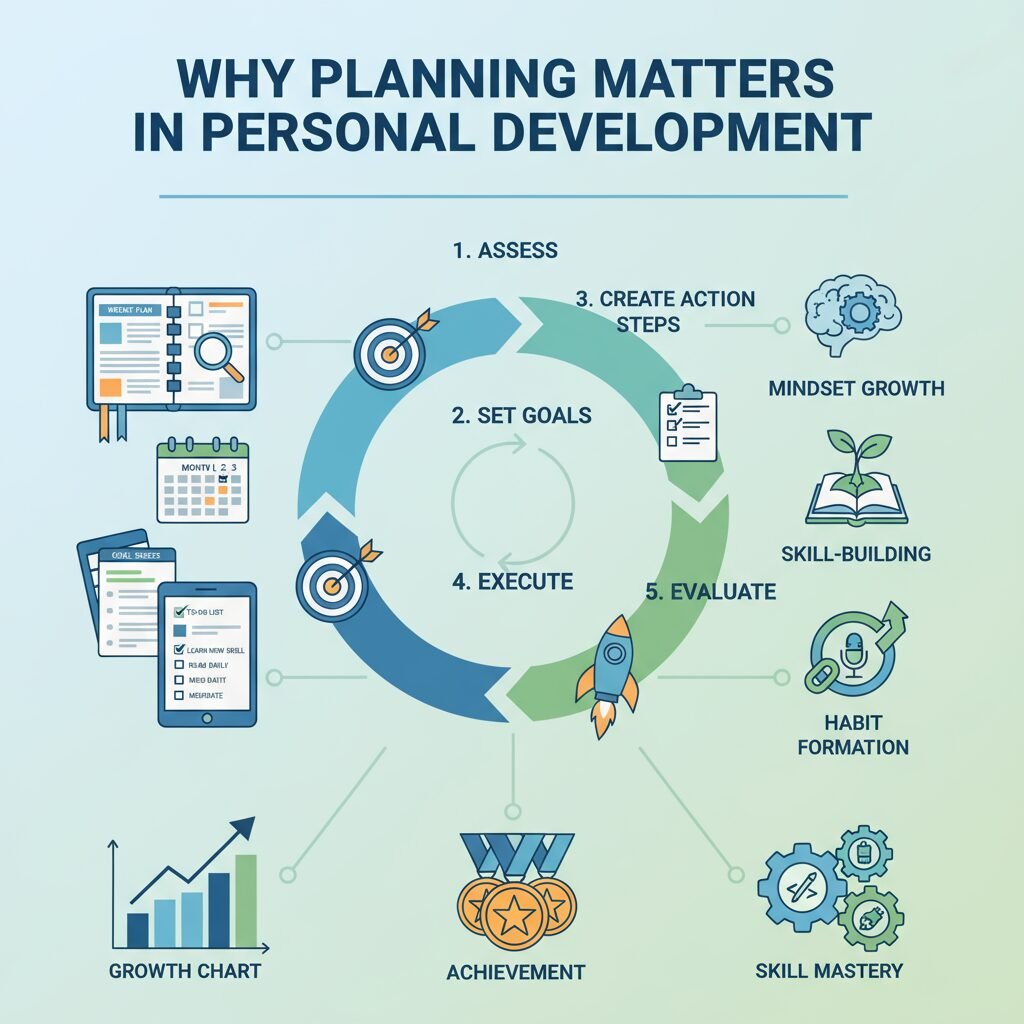
Without a plan, personal growth can become uneven. Here are some important reasons why planning is vital in personal growth:
- Provides clarity of purpose.
- Ensures steady progress toward goals.
- Helps you stay focused and avoid distractions.
- Encourages accountability and discipline.
- Fosters a long-term mindset.
Step 1: Define Your Vision
Every great journey begins with a clear vision.
Ask yourself:
- What do I want my life to look like in 5 or 10 years?
- What values do I want to live by?
- What legacy do I want to leave?
A personal vision statement serves as your guiding light, helping you navigate challenges and stay connected to your long-term goals.
Example:
“My vision is to lead a balanced life filled with health, meaningful relationships, and financial freedom while continually learning and helping others grow.”
Step 2: Set SMART Goals
After defining your vision, the next step is to set SMART goals:
- Specific – Clearly define the outcome.
- Measurable – Use metrics to track progress.
- Achievable – Keep it realistic.
- Relevant – Align with your vision.
- Time-bound – Assign deadlines.
Example:
Instead of saying “I want to be healthier,” say: “I will exercise for 30 minutes, five times a week, for the next three months.”
Step 3: Conduct a Personal SWOT Analysis
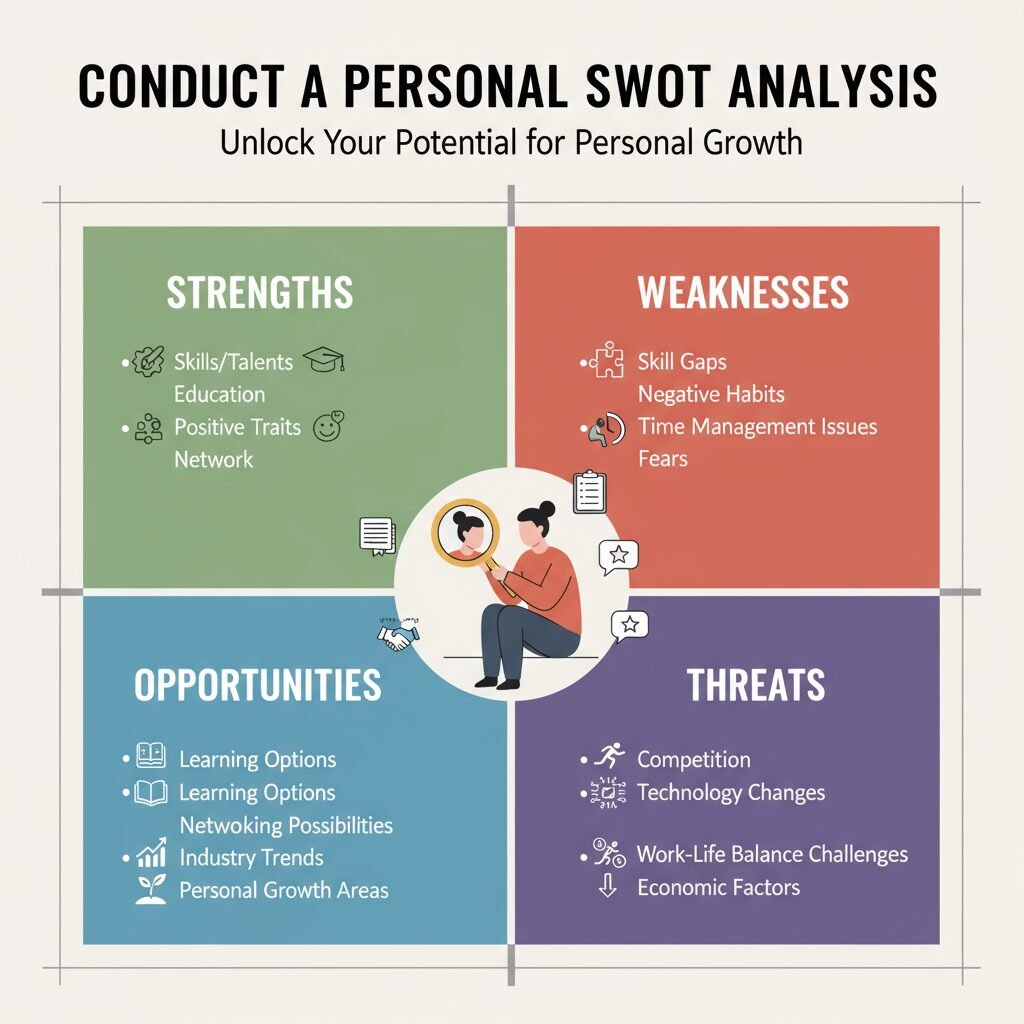
A SWOT Analysis (Strengths, Weaknesses, Opportunities, Threats) works well for individuals.
- Strengths: Your skills, talents, and resources.
- Weaknesses: Habits, limitations, or fears.
- Opportunities: Growth areas, chances to learn, new connections.
- Threats: External challenges, stressors, or distractions.
This exercise helps you see a clear picture of where you are now and what might hold you back.
| Aspect | Without Strategic Planning | With Strategic Planning |
|---|---|---|
| 🎯 Clarity | No clear direction, random efforts | Defined vision and goals |
| ⏳ Time Management | Wastes time on distractions | Focuses on priorities |
| 💪 Motivation | Easily gives up on challenges | Motivated by progress milestones |
| 📊 Progress Tracking | No way to measure growth | Clear metrics and habit tracking |
| 🌟 Long-Term Success | Uncertain future, low confidence | Steady growth and achievement |
Step 4: Identify Resources and Tools
No growth journey happens in a vacuum. Use available resources to support your progress:
- Books and Courses (Self-improvement, leadership, finance).
- Apps and Software (Notion, Trello, Habitica, Headspace).
- Mentors and Coaches (Seek help from experts).
- Journals (Track reflections, habits, and gratitude).
Step 5: Create an Action Plan
A goal without a plan is just a wish. Break your long-term goals into daily, weekly, and monthly action steps.
- Example Action Plan for Health:
- Daily → Drink 8 glasses of water, walk 10,000 steps.
- Weekly → Strength train 3 times.
- Monthly → Track body weight and take progress photos.
A structured plan helps ensure discipline and consistency.
| Frequency | Tasks | Tools & Resources |
|---|---|---|
| 📅 Daily |
– Morning journaling (clarity & focus) – 30 min learning (books, podcasts, courses) – Exercise & mindfulness practice |
Notion / Evernote, Kindle, Headspace |
| 🗓️ Weekly |
– Review progress & adjust goals – Networking / meaningful conversations – Skill-building session (1–2 hours) |
Trello, LinkedIn, Coursera |
| 📆 Monthly |
– SWOT analysis of growth progress – Evaluate metrics (time, productivity, learning) – Celebrate small wins & reset goals |
Google Sheets, Toggl, Habit Tracker |
Step 6: Implement and Track Progress
Implementation is where commitment meets discipline. Use tools like:
- Habit Trackers
- Project Management Apps
- Accountability Partners
Regularly check your performance to stay motivated and make adjustments.
Step 7: Review and Adjust for Continuous Growth
Life changes, and your plan should, too.
- Review progress monthly and yearly.
- Celebrate small wins.
- Adjust goals as your vision changes.
This keeps personal growth a lifelong journey, not a one-time effort.
Benefits of Planning for Self-Improvement
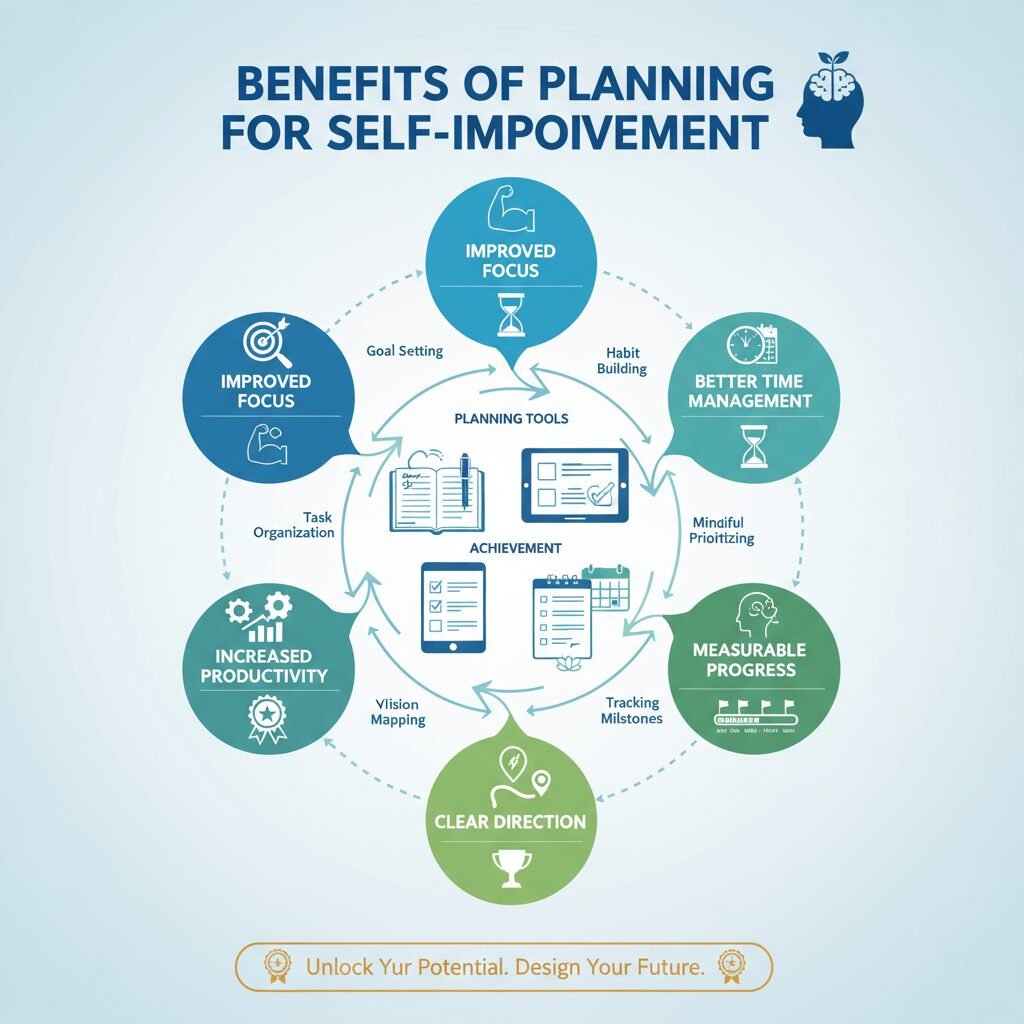
- Builds focus and discipline.
- Helps manage time effectively.
- Boosts self-awareness and confidence.
- Provides motivation through milestones.
- Aligns short-term actions with long-term goals.
Voice Search Optimized Q&A
Q1: What is strategic planning for personal growth?
Planning for personal growth means defining your vision, setting goals, and creating a structured action plan to reach long-term success.
Q2: How do I create a personal strategic plan?
Begin by defining your vision, setting SMART goals, doing a personal SWOT analysis, using resources, making an action plan, tracking progress, and reviewing regularly.
Q3: Why is planning important for self-improvement?
Because it offers clarity, direction, and consistency, helping you stay on track with your personal development goals.
Conclusion
Strategic planning for personal growth is not about perfection; it’s about making progress with purpose. By following these 7 key steps, you can create a plan that ensures your daily actions line up with your long-term vision.
Remember: growth doesn’t happen by chance; it happens through intentional choices and consistent actions.
for more article click here


Leave a Reply